.svg)



.svg)
“We need something that works like a gas pump and takes credit cards for payment for bulk water sales.”
This is a request I have heard many times. When searching the web, customers will see various terminology such as bulk water filling station, water dispensing station, truck fill station, water salesman, etc. Customers may also have various requirements based upon their location, site, and project. However, at the core of every request is the same need: a self-service station for water sales.
.jpg)
A “gas pump” is a good comparison. The user will drive up, connect their truck, and purchase water- all without the need of an attendant. The station instead monitors flow and ensures customer payment. After identifying the need for a bulk water fill station, the next question to ask should be: “Which payment method is right for my bulk water filling station?” While adding a credit card reader can be done, there are many options that should be considered for your specific application. In this post, we will discuss all payment methods as well as their pros and cons.
What payment methods can I add to a bulk water filling station?
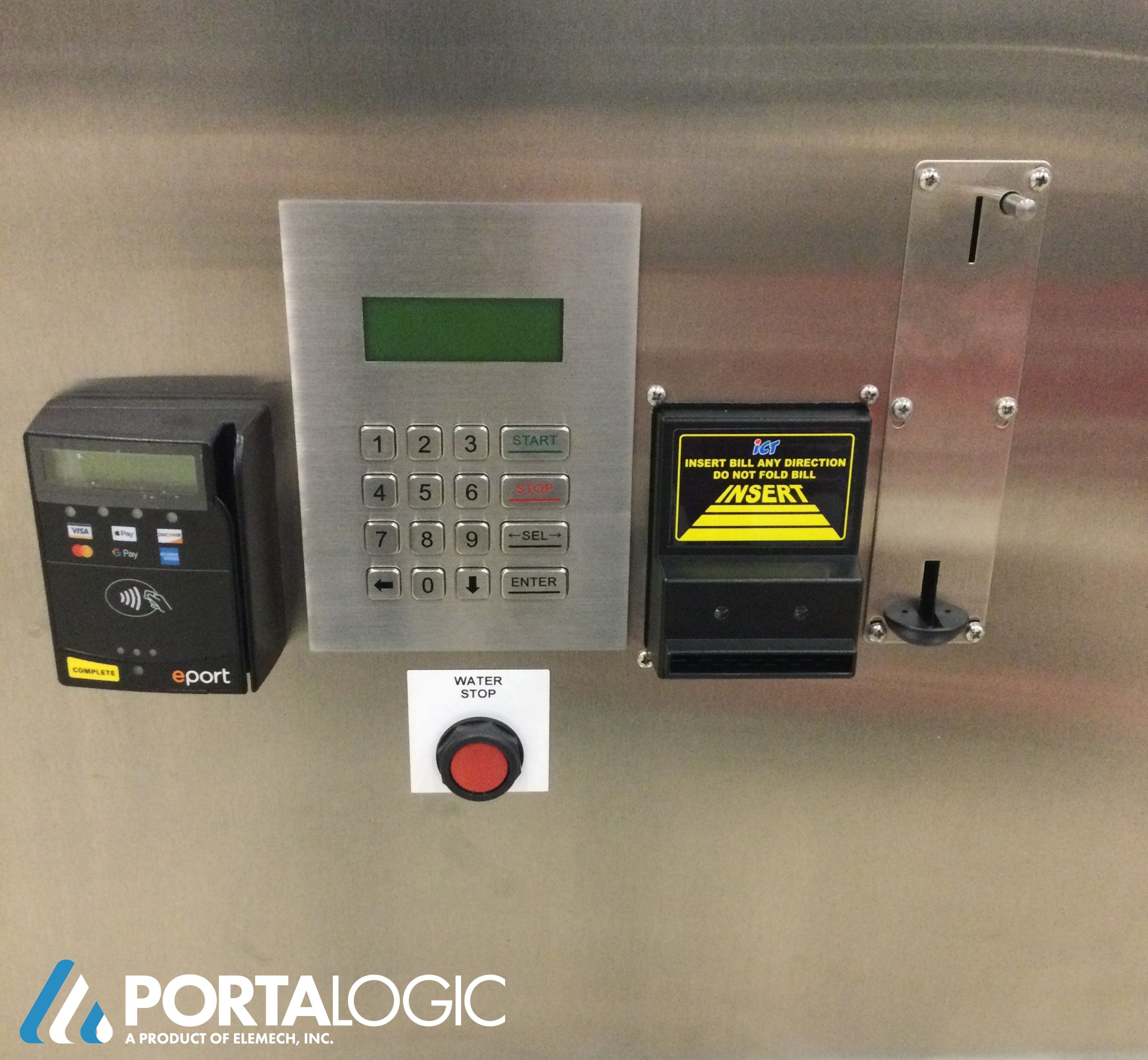
There are five main bulk water filling station payment methods most operators consider:
- Coin acceptors
- Bill acceptors
- Credit card readers
- Web-based payment portals
- Manual invoicing
Many stations end up using a combination of two or three payment options, rather than relying on just one. Let's break down each option below.
Coin Acceptors: Physically mounted to the access panel to collect US Quarters for water payment
Pros:
- Simple, reliable, and well understood by users of more legacy timer-based systems
- No transaction fees
- Works great in areas with spotty internet or cell service
- Lower upfront hardware cost compared to card readers
Cons:
- Coin boxes need regular emptying and reconciling — more manual labor for you
- Vulnerable to jamming, tampering, or theft
- Customers need exact change, which can mean lost sales or an influx of users to your office asking to exchange bills for coins
Bottom Line: A coin acceptor is an acceptable option for operators with a small customer base or where station users were previously accustomed to a coin operated legacy system.
Bill Acceptors: Physically mounted to the access panel to accept $1, $5, $10, and $20 dollar bills. Operators can choose one or multiple $USD denominations.
Pros:
- No transaction fees
- Works offline, same as coin acceptors
Cons:
- Exact payment needed. Stations do not issue change.
- Bill jams and resulting maintenance, especially with worn or damp bills
- Needs regular collection and reconciliation
- Vulnerable to theft
- Environmental considerations like dust or rain entering bill terminal
Bottom Line: A bill acceptor is a solid upgrade from coins alone, especially paired with a coin acceptor for smaller top-offs. However, many of the same shortcomings apply.
Credit Card Reader: Physically mounted to the access panel to accept a credit card for water payment
Pros:
- Point of sale payment for one time customers to ensure collection of funds
- Smooth and familiar user experience
- Outdoor rated, even in extreme climate conditions
- PCI certified
Cons:
- Processing fees take a percentage of every transaction
- Limits operators’ control over authorized user access
- Requires reliable cellular connectivity at the station location
- Requires customers to enter a set volume amount. No refund is given if customers end transaction before total volume is dispensed.
- Requires customers with multiple authorized users to issue credit cards to their authorized trucks.
- Theft or credit card “skimming” risk
Bottom Line: A credit card reader offers a familiar and user friendly experience and is ideal for operators who have a high volume of one-time customers. While station software will allow operators to “pass along” processing fees and monthly account costs, the added administrative effort to do so must be considered.
Web-based payment portal: Included with every Portalogic station, an integrated customer dashboard allows customers to manage their account and payments via credit card and bank account independently.
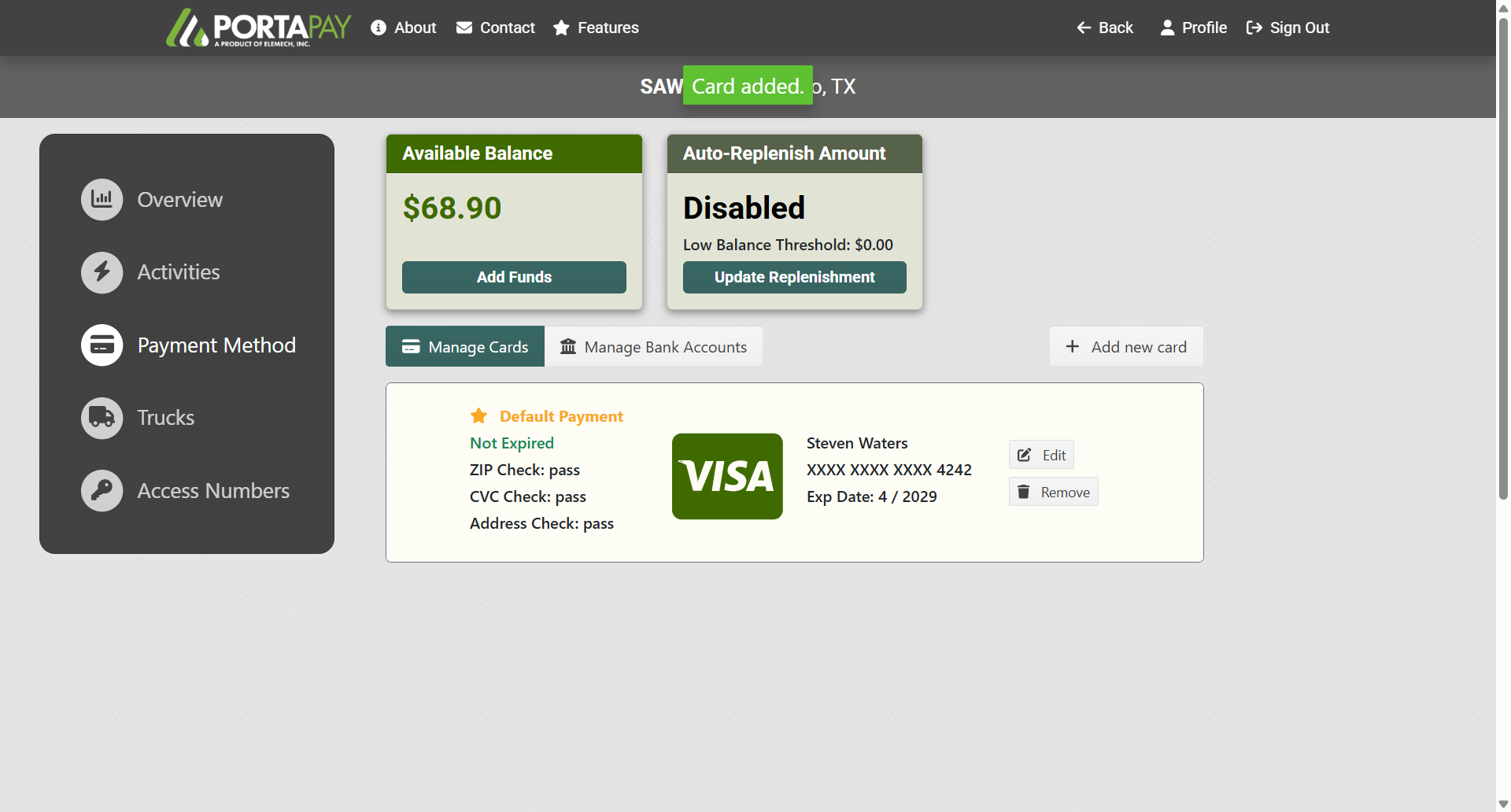
While not offered by every station manufacturer, Portalogic’s web-based payment portal lets customers pre-pay or set up an account online, then use their access credentials or one time code at the station itself.
Pros:
- Enables account-based billing or bulk pre-purchases — great for regular customers
- Allows customers to set a low balance threshold for automatic funds replenishment
- Customer payments fully integrate with station management software, allowing a full view of customer purchase history
- Allows customers to manage more than their funds – customers will also see their real time activity, access credentials, and history of payment
- Customer service provided by station supplier and not your administrative staff
Cons:
- Requires customers to be comfortable with tech and have internet access via their computer or cellular phone
- Requires the station itself to have network connectivity
- Processing fees will still apply, however at lesser % rates than a traditional credit card reader
Bottom Line: A web-based payment portal is excellent for loyal, repeat customers and businesses buying in bulk. However, stations without internet connection will not be compatible.
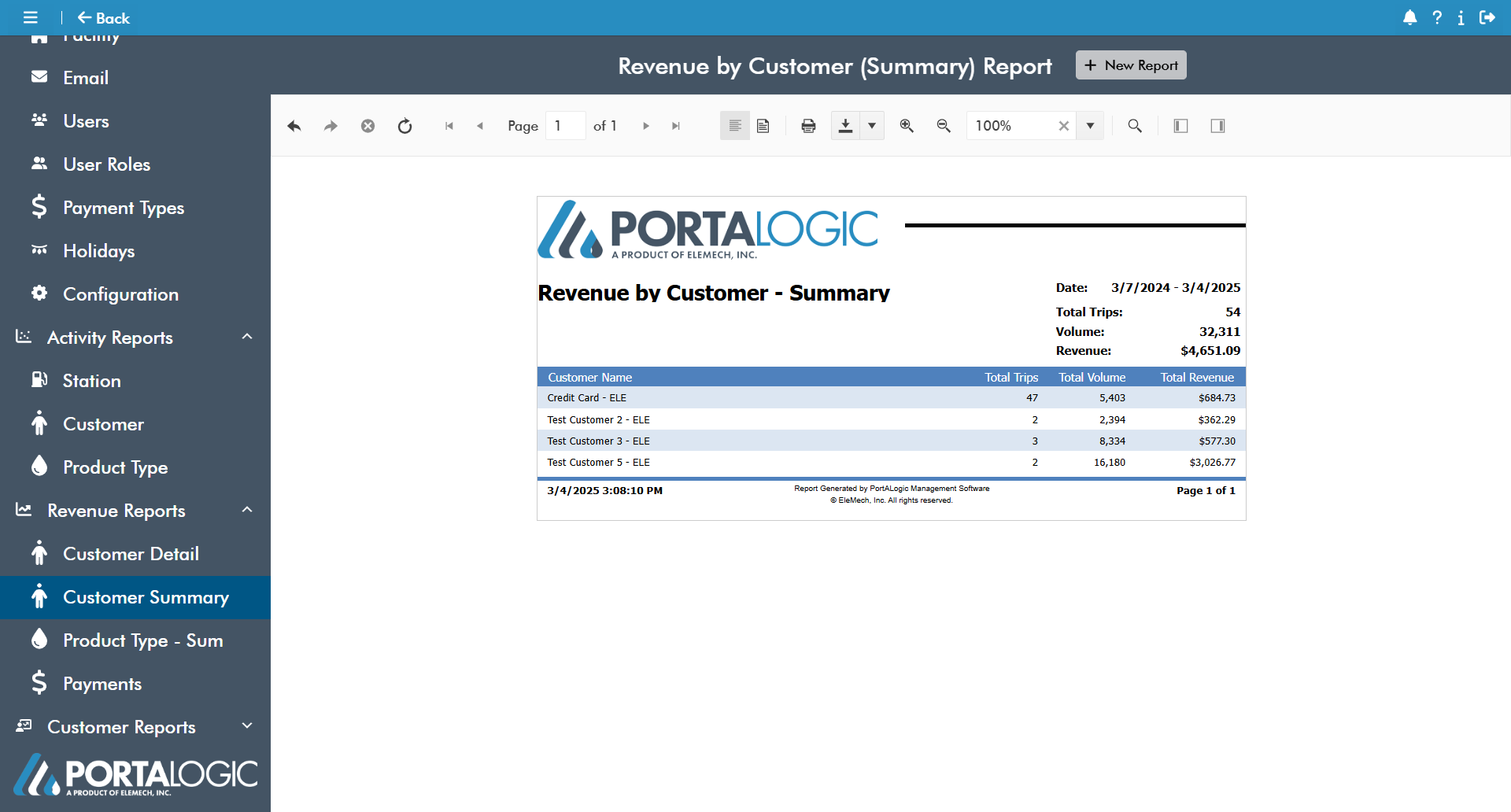
Manual Invoicing: Included with every Portalogic station, operators can utilize collected data to run an automated report and collect payment via external invoice.
Pros:
- Offers flexibility with payment terms (net 30, monthly billing, etc.)
- Offers flexibility with operators if they use their own designated financial or accounting software
- No hardware needed at the station itself
- Can be used in combination with other station payment methods
Cons:
- Slower cash flow since you're waiting on payment after the fact
- More administrative time spent tracking, sending, and following up on invoices
- Not practical for everyday walk-up customers
- Carries some risk of late or unpaid invoices
Bottom Line: The ability to utilize manual invoicing for water payments as well as other fees (permitting, etc) offers flexibility to operators, especially if they have legacy accounting/billing software. If used as the sole payment method, operators would have to manually record payment in station software to reconcile customer usage and payment.
Which bulk water filling station payment method should you choose?
Most successful bulk water filling stations layer a few payment options together. For example, our Portalogic stations could allow all of the above. To receive a recommendation for your site, we encourage you to call our office directly for a 5 minute design conversation with an engineer. We have heard many customer requirements which can further complicate your decision– multiple water rates, alternate volume billing (ie per 100 or 1000 gallons, cubic meters, etc), discount rates...—and can make recommendations suited to your customer base as well as your office requirements.
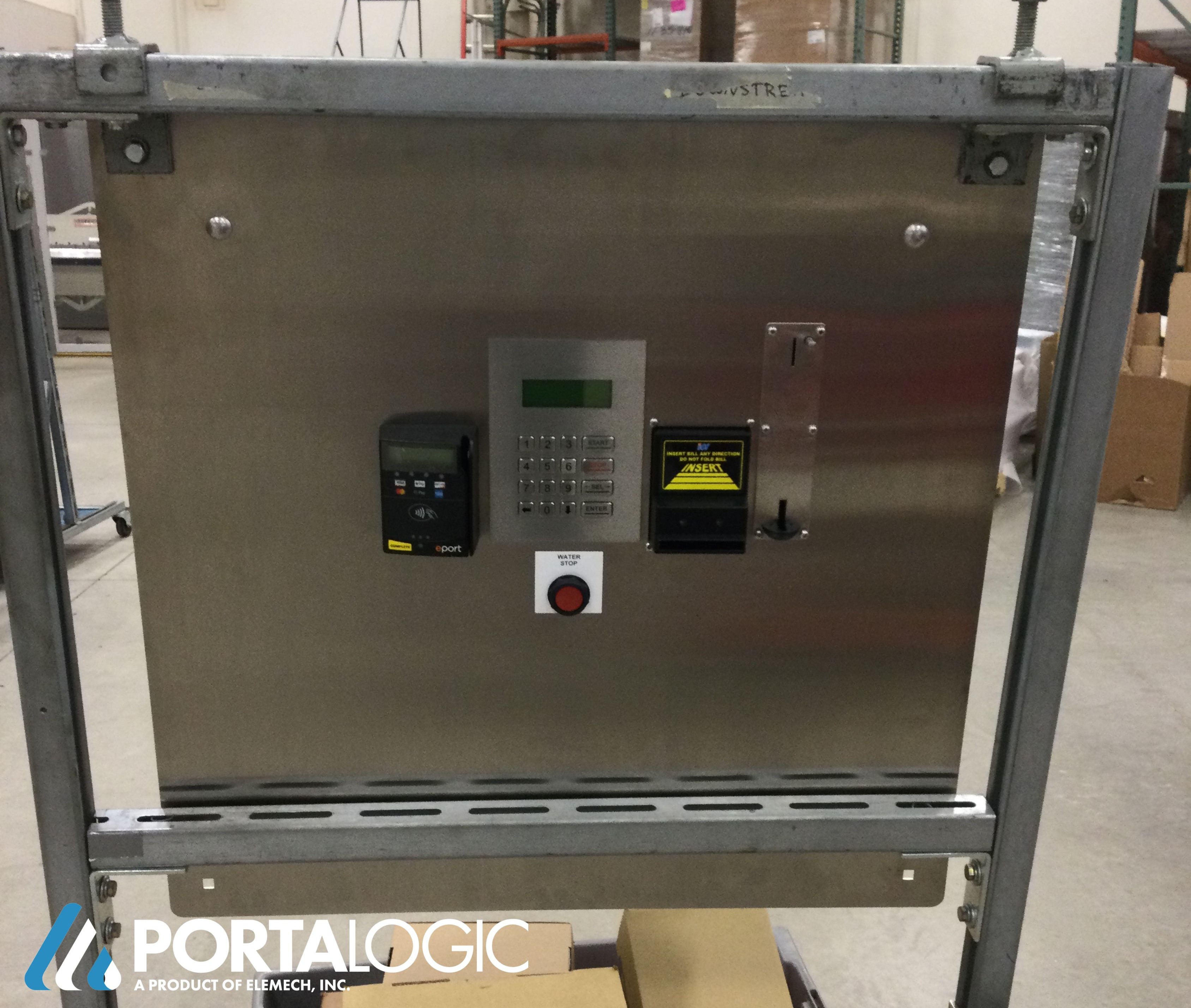
Trusted expertise in bulk water and wastewater—delivered by Portalogic.

.webp)
