.svg)



.svg)
How Does Support Work? A Guide to Portalogic Station Support
When you're evaluating a bulk water dispensing station or a septage receiving station, one question comes up again and again: what happens after it's installed? You're putting a piece of revenue-generating infrastructure into service, often at an unattended site, and you need to know that help is there when you need it.
Here's the short answer: Portalogic support is built around a simple idea — you should be able to handle the routine things yourself, get remote help fast for the specialized things, and have a technician onsite when that's genuinely the right call. Below, we walk through exactly how that works, from the day your station is assembled to the day-to-day of keeping it running.
Every station is tested and assembled before it ships
Support starts long before a station reaches your site. Each model is fully assembled and tested before it leaves our facility, so the unit that arrives at your location has already been through its paces — not just its individual components, but the system working together as one.
Every station ships with the documentation your team needs to get it into service and keep it there:
- Installation guides that walk your crew or contractor through siting, connections, and startup step by step.
- Product manuals covering operation and the specifics of your configuration.
Because the heavy lifting of testing and assembly happens on our end, most sites find that commissioning is straightforward and predictable — and that the documentation answers the majority of questions before they ever become support calls.
Support that works across every time zone
Portalogic serves customers across the country and in international time zones. That geographic spread shapes how we think about support: it can't depend on a technician being a short drive away, because for most of our customers, they aren't.
That's why the model is designed so the fastest path to a resolution is usually not a truck roll. Documentation, site-manageable maintenance, and remote support handle the vast majority of situations quickly — regardless of where your station sits on the map or what the clock says at our facility.
Most hardware troubleshooting can be handled in-house
Here's something many operators are glad to hear: when troubleshooting involves the station's basic infrastructure, and that work can be managed independently by your site or by contractors of your choice.
Think about the physical components that make up a dispensing or receiving station — meters, valves, backflow prevention, and similar plumbing and mechanical infrastructure. Maintenance and servicing of these components use standard water and wastewater industry practices and standard parts. That means:
- Your own maintenance staff can service them directly, if you have the capacity in-house.
- Or you can bring in contractors of your preference — the plumbers, mechanical contractors, and service techs you already know and trust.
You're not locked into a single provider for routine infrastructure work, and you're not waiting on anyone to keep the basics running.
Specialty hardware and PLC support — handled remotely
Not everything is a valve or a meter. Stations also rely on specialty hardware — most notably the PLC (programmable logic controller) that runs the station's control logic, along with the programming behind it.
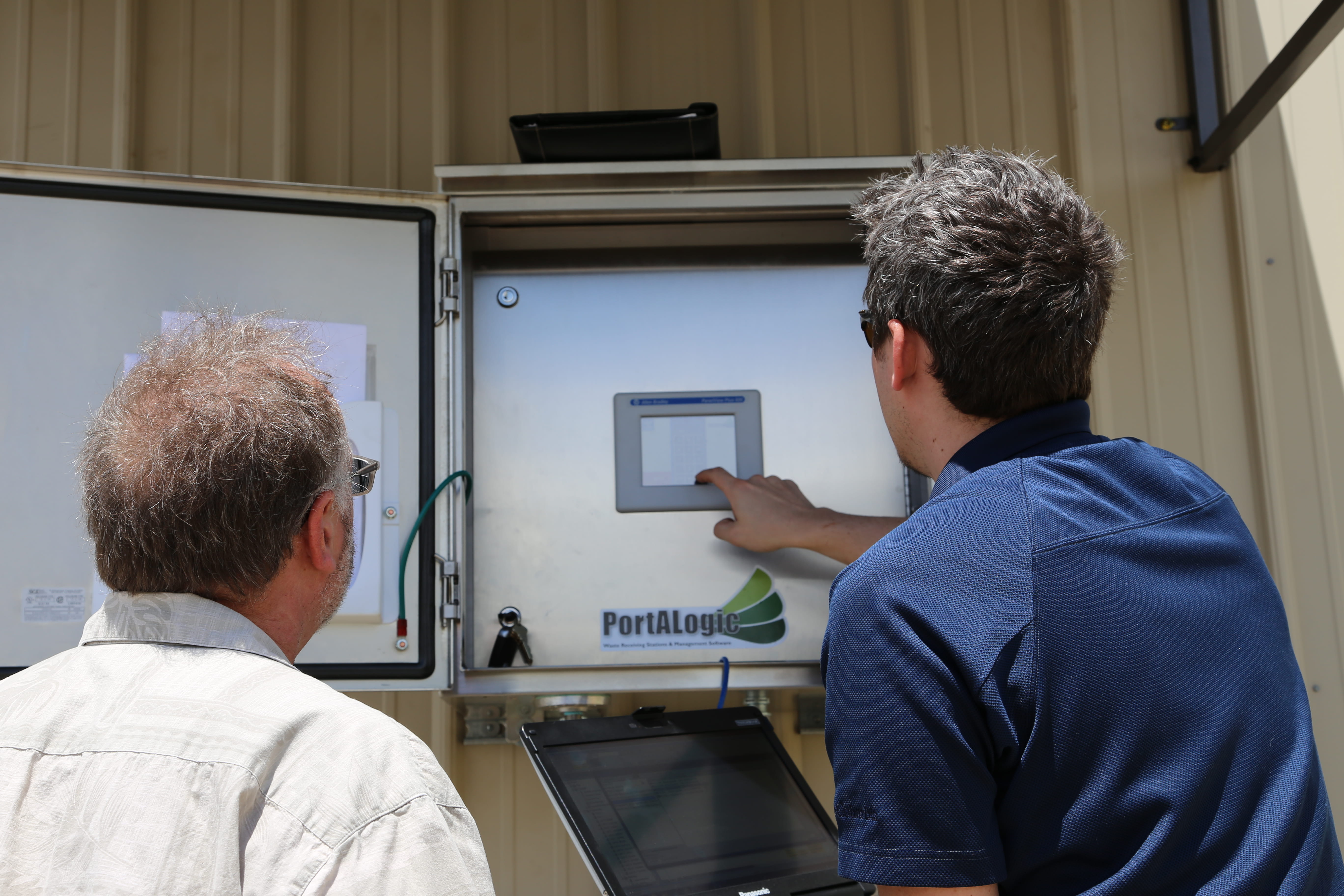
This is where remote support shines. PLC and programming support is done remotely, which means our team can diagnose behavior, adjust logic, and push updates without anyone needing to be physically present. For a customer three time zones away — or an ocean away — remote access turns what could have been a multi-day scheduling problem into a same-conversation fix.
When you'd rather have someone onsite
Remote-first doesn't mean remote-only. Sometimes an operator simply prefers to have a person on the ground — for a complex commissioning, a hands-on walkthrough, or peace of mind on a critical issue.
If it's your site's preference for a technician to travel to you, we have a team available to do exactly that. The choice is yours. We lead with remote and site-manageable support because it's usually faster and more convenient, but an onsite visit is always on the table when that's what you want.
Routine operational troubleshooting: always available during business hours
For the everyday questions — how the hardware is behaving, how the software is configured, what a particular reading or alert means — routine operational troubleshooting is always offered during business hours by phone or email.
This covers both sides of the station:
- Hardware: questions about how components are operating and what a given behavior indicates.
- Software: access control, metering, billing, reporting, and the rest of the platform your operators interact with day to day.
Pick up the phone or send an email during business hours, and you'll reach a person who knows the product.
Putting it all together
Portalogic support is layered on purpose:
- Tested, assembled, and documented before it ships — so most questions are answered before they start.
- Site-manageable infrastructure maintenance — meters, valves, and backflow handled by your team or your preferred contractors.
- Remote specialty support — PLC and programming issues resolved without a truck roll.
- An onsite team when you want one — because sometimes that's the right call.
- Business-hours phone and email support — for the routine operational and software questions that come up along the way.
Wherever your station is — across the country or across the world — the goal is the same: keep it running with as little friction as possible, and make sure the right kind of help is always within reach.
Have a question about support for a specific model or configuration? Reach out to our team — we're happy to walk through what support looks like for your site.
Trusted expertise in bulk water and wastewater—delivered by Portalogic.

.webp)
